
At the Waldorf School of St. Louis, It’s Always a Beautiful Day to Go Outside
For young children, there are tremendous benefits to outdoor play. At the Waldorf School of St. Louis, building a connection with nature is essential to our work as educators.
For young children, there are tremendous benefits to outdoor play. At the Waldorf School of St. Louis, building a connection with nature is essential to our work as educators.
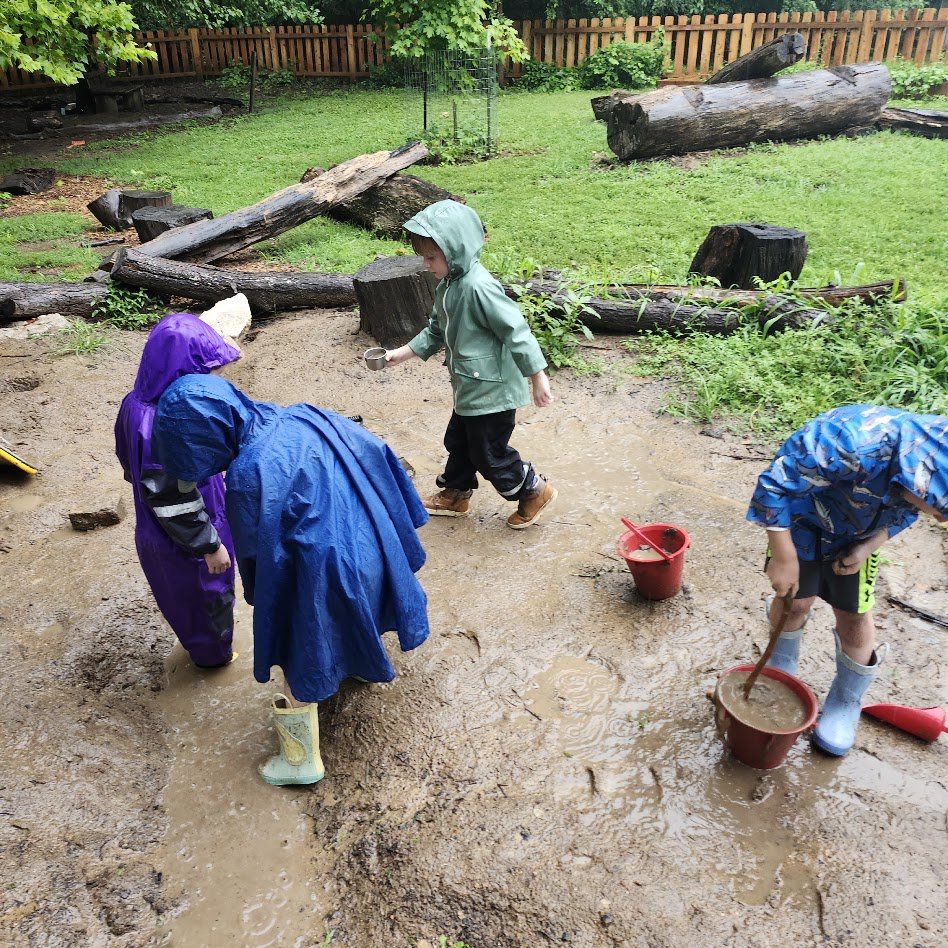
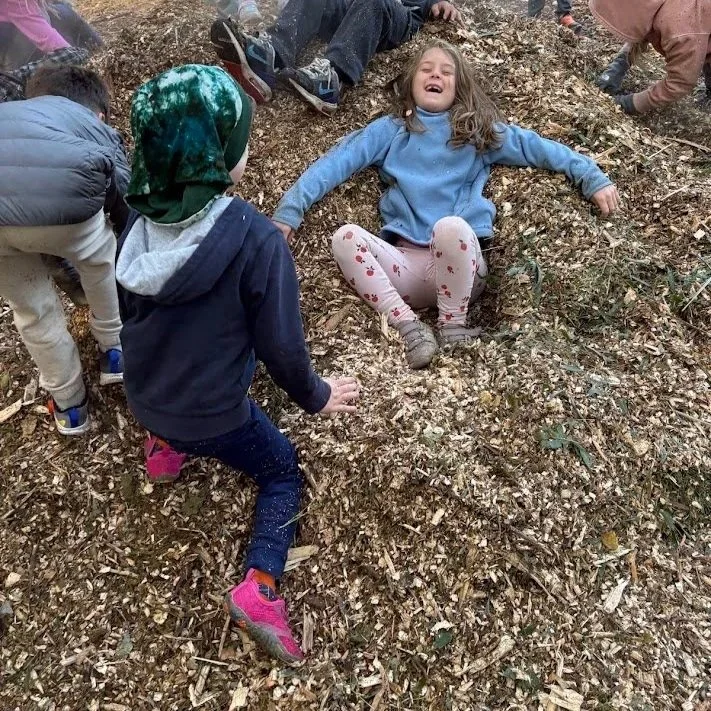
When autumn arrives at the Waldorf School of St. Louis, children run through piles of fallen leaves, tossing them in the air to see how they scatter. When a winter storm sweeps across campus, students scoop snow into snowballs, learning how they can pack and smooth the ice between gloved palms. In spring, we gather under shady trees for a morning snack, noticing how the bees and butterflies have reappeared in the campus garden.
For young children, there is so much to learn, see, do, and experience outside. Through outdoor exploration and play, children build an intuitive understanding of the Earth and its rhythms, curiosity about how the world works, and an appreciation for the beauty and wonder of the natural world. Just as important, research has repeatedly demonstrated that time outdoors is linked to a wide range of physical, cognitive, and emotional benefits, including improved academic engagement and a happier and healthier adulthood.
A Nature-Based Approach to Early Childhood
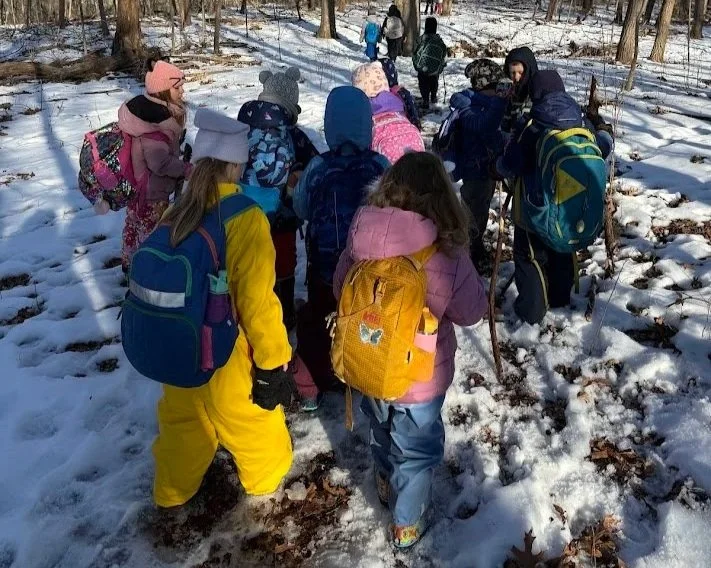
Building a connection to the natural world is fundamental to Waldorf education. At the Waldorf School of St. Louis, that relationship is nurtured in our preschool and kindergarten classrooms, where children spend ample time outdoors every day—and in all weather.
Here, the school day begins outside. Breathing fresh air and feeling the ground beneath their feet is, quite literally, grounding, giving the class an opportunity to settle into their surroundings before we begin the day’s activities. While we enjoy indoor play time, crafting, and cooking in our cozy classrooms, time outdoors is a significant part of our daily rhythm at school, with long stretches of social imaginative play in the campus green space, our beloved meadow.
Outdoor experiences are enhanced by a curriculum of stories, puppet shows, poems, and songs that reflect and celebrate the changing seasons. Teacher-guided activities and crafts are likewise seasonal, and we decorate classrooms with natural elements that connect us to the Earth: leaves and pumpkins in the fall, pine cones and candles in winter, flowers and grass in springtime.
The Superpower of Outdoor Play
A wide breadth of research shows that imaginative play is essential to a child’s cognitive, emotional, and physical development. Many of the known benefits of play—for example, building resilience or developing spatial awareness—are enhanced during outdoor play, where children have diverse terrain and increased opportunities for experimentation, exploration, and risk-taking.
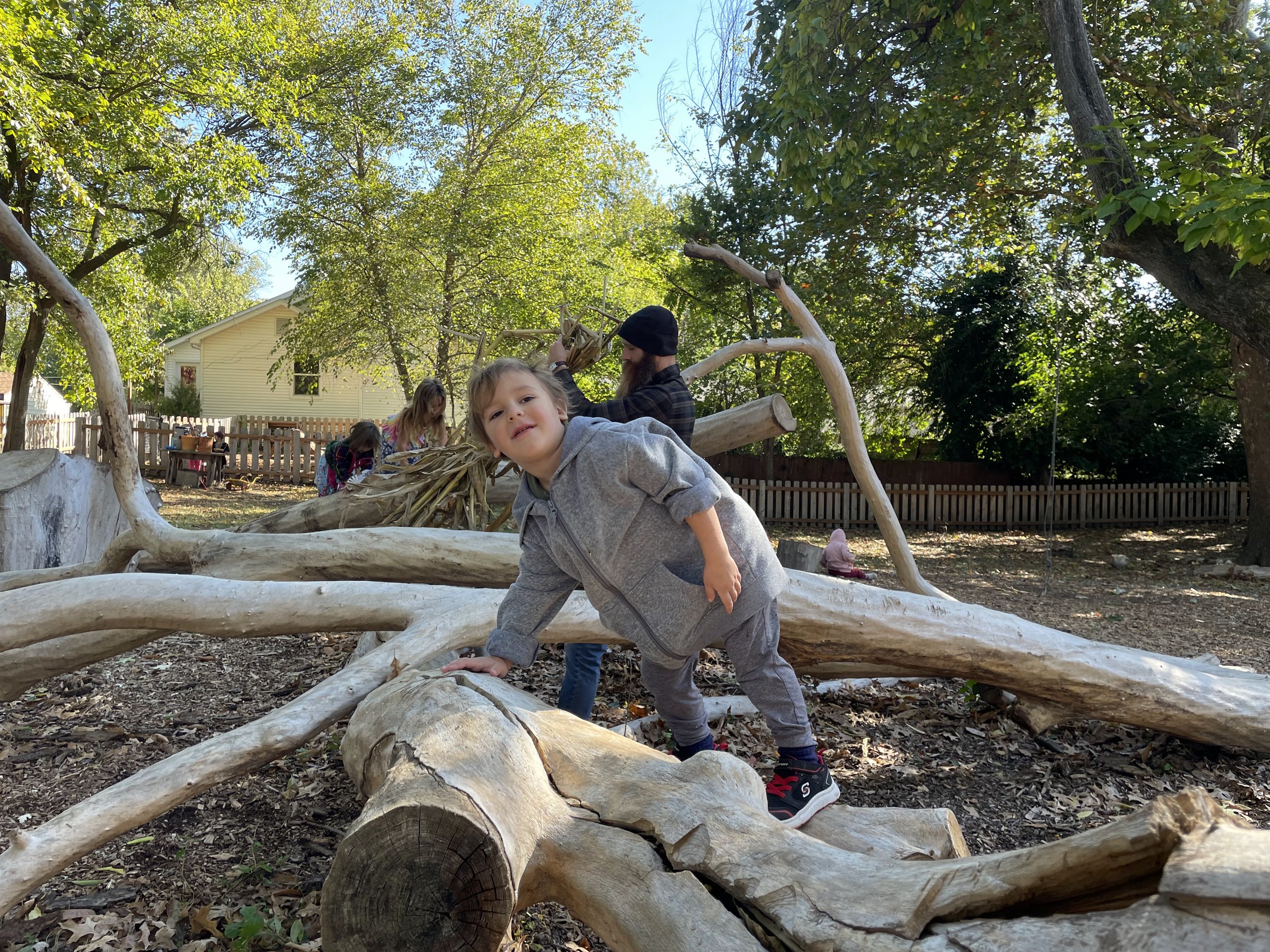
At the Waldorf School of St. Louis, our green spaces are designed to encourage the type of open-ended and imaginative play that most benefits young children. Rather than slides and seesaws, the meadow is filled with wide-open spaces for running, oversize tires to climb on, and wood planks for building forts. We light fire pits where children cook bread and burritos over an open flame (with careful adult supervision!). There is even an old-fashioned water pump on the property, recently donated and installed by our families—and enthusiastically employed by our preschool and kindergarten students.
Even as formal academics begin, time outdoors doesn’t end at our school. Teachers continue to take classes outside when a lesson calls for it, using the meadow as an outdoor classroom or a living lab for observation and study. Students go outside for movement and games, including visits to Ivory Crocket Park across the street. With recess outside, twice a day, students in the early grades continue to benefit from plenty of social, unstructured outdoor play.
Time Outdoors Fuels Science Learning in Elementary School
While it may look and feel like play, spending time outdoors during early childhood lays the groundwork for science learning in the early grades and beyond. In grades 1-3, our science curriculum is built around nature studies, gardening, and practical and artistic activities that reinforce scientific concepts.
These experiences are enhanced by weekly classes in our campus teaching garden. Activities like planting seeds, stirring compost, and harvesting fruits and vegetables give students a real-world understanding of the carbon cycle, which will be enhanced during the formal study of agriculture and farming in 3rd grade.
The Waldorf approach to STEM (science, technology, engineering, math) is distinctly experiential, growing in complexity with every passing year. Our aim as educators is to encourage students to observe, test theories, create hypotheses, and discover scientific principles for themselves through hands-on projects, field work, and lab sciences.
Spending ample time outdoors provides an experiential foundation for these activities. Just as importantly, time outdoors imbues children with a natural respect for and curiosity about the world around them, encouraging them to more deeply engage with life sciences, physics, and chemistry in middle school.
Outdoor Play Is Food for the Brain
Outdoor explorations bolster classroom learning at the Waldorf School of St. Louis, but outdoor play is important for children’s cognitive development in many other ways. According to researchers, outdoor play is training for children’s growing brains, supporting new cognitive pathways through a blend of imagination and experience.
Activities like jumping from tree stump to tree stump, splashing in puddles, or building a fort with planks and logs are all activities that require motor skills, spatial awareness, problem-solving skills, and creativity. Research even shows that outdoor play can stimulate more resilience and independence in children because it often includes more opportunities for “risk.”
On that note, children at our school spend time outdoors in all weather—learning, as the Scandinavian saying goes, “there’s no such thing as bad weather, only insufficient clothing.” While it can certainly get wet and snowy on the play yard during our cold Midwestern winters, our students know how to dress comfortably for the weather. Even more importantly, they learn to joyously embrace challenging conditions, ultimately fostering more adaptable, resilient, and independent young adults.
It’s a Beautiful Day to Go Outside
As human beings, we are a part of the natural world, not separate from it. Building a deep connection to the Earth is essential to Waldorf education. Even more important, it is essential to a happy and healthy childhood—and long-term satisfaction and success as an adult.
Would you like to visit our campus and see the meadow for yourself? Reach out to our Enrollment Team, at admissions@waldorfstl.org or sign up for one of our admissions events.
Transitioning from public school to Waldorf Kindergarten: A Parent Perspective
My daughter, Taylor, started off kindergarten in a traditional public school. My husband and I had done our research, and we were in one of the best rated school districts in the Seattle area. We thought we were set up for the perfect school experience for our children.
My daughter, Taylor, started off kindergarten in a traditional public school. My husband and I had done our research, and we were in one of the best rated school districts in the Seattle area. We thought we were set up for the perfect school experience for our children. The year started off okay with her meeting new friends and getting to know her teacher, but it quickly turned to frustration.
She was constantly rushed. She would come home from school starving with not even half of her lunch eaten. When I asked, she would tell me she didn’t have time to eat it. Her class had 23 minutes to eat lunch, including making their way to and from the cafeteria. She didn’t go outside for recess when it was raining and, in Seattle, it is always raining. She started to not like reading books at bedtime because she didn’t want anything to do with reading. She was being asked to write stories before she really knew how to sound out words. She often came home with unfinished art projects and notes from her teacher about how she had “another break down” when she didn’t have time to finish. She would come home so discouraged every day. She loved the social aspect, but hated school!
“She started to not like reading books at bedtime because she didn’t want anything to do with reading.”
Then our family went through a huge transition. I lost my job, and my husband found a great job in St. Louis. We packed up, moved halfway across the country (on Christmas Eve….), and worried constantly about pulling our 5 year old out of school in the middle of year. She was already struggling so much. We HATED to throw even more at her. Lucky for us, I found The Waldorf School of St. Louis! We knew very little about Waldorf education (other than a distant friend’s children attending a school in Oregon), and found the school through Google. The more I learned, the more excited I was. It almost sounded too good to be true!
“She is enjoying being a kid again…”
Taylor started in January, and has had the last several months to reset and remember how to be a kid. She has been climbing trees, playing in dirt, working on art projects, and falling back in love with learning and discovering on her own terms. She may not be able to read or write a ton, but neither could I at that age. That will all come in time, when she is developmentally ready. She has started asking to read books again, and sitting with her younger brother and reading (or making up stories to go with the pictures on the page) to him. She is enjoying being a kid again, and I am enjoying watching my happy, little girl grow in ways that I didn’t think possible a few short months ago.
– Katie, parent of Taylor in Kindergarten