
Classrooms at the Waldorf School of St. Louis are intentionally screen-free, engaging children in the tactile, hands-on, and social experiences they need to grow.
Laughter, time outdoors, crafts, singing, movement, and play: These are the building blocks for a rich and healthy childhood. At the Waldorf School of St. Louis, we know that young children’s bodies and brains are built through immersive, real-world, and hands-on experiences, and we are committed to providing an education that encourages their holistic intellectual, social, and physical growth.
Part of that commitment is intentionally limiting children’s exposure to tech and digital media. There are no screens or educational technology in our play-based preschool, kindergarten, and early grades classrooms, and we encourage parents to limit or eliminate digital media at home—providing children with the multisensory and real-world experiences they need to grow.
Rich Foundations in Early Childhood
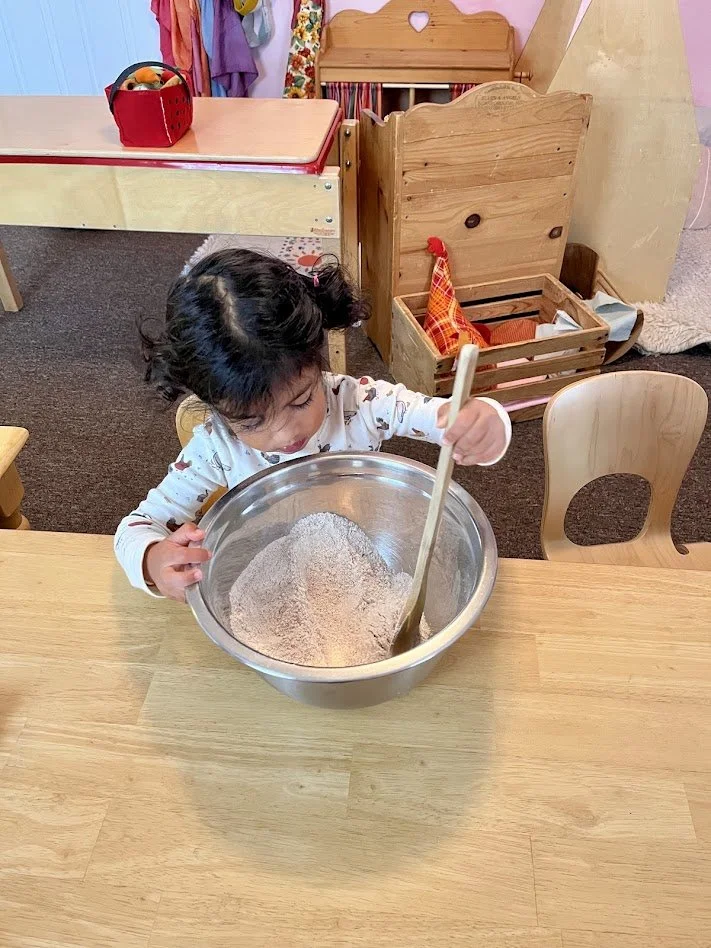
Climbing a tree, kneading bread dough, building a block tower: Our brains are hard-wired to learn from engaging and sensory-rich experiences like these. While screens and digital media are deeply alluring to young children, they don’t provide the same broad cognitive stimulation as real-world activities—and screen time can interrupt sleep, attention span, and creativity, even in adults.
“Children need to explore their environment using all their senses to learn about the world, so it is very important that they can interact with three-dimensional spaces and activities,” writes Dr. Jennifer F. Cross, a pediatrician and developmental and behavioral pediatrics expert at New York-Presbyterian. “This provides so much more information than watching a two-dimensional picture on a screen.”
At the Waldorf School of St. Louis, our preschool and kindergarten programs are aligned with current research about how young children learn. Our expert teachers thoughtfully choose activities that will encourage intellectual, social, spiritual, and physical development, including arts and crafts, movement, music, and chores. In our active classroom, we paint, draw, sing, finger knit, chop vegetables, and sweep floors, activating our bodies and minds as we do.
Most importantly, our preschool and kindergarten students have ample time for unstructured, child-led play. Years of research have shown that play isn’t just natural to childhood, it is essential to human development. Research has shown that play stimulates cognitive growth in the prefrontal cortex, boosts communication skills, and develops critical capacities for self-regulation and executive function in young children.
Experiential Learning in Elementary School
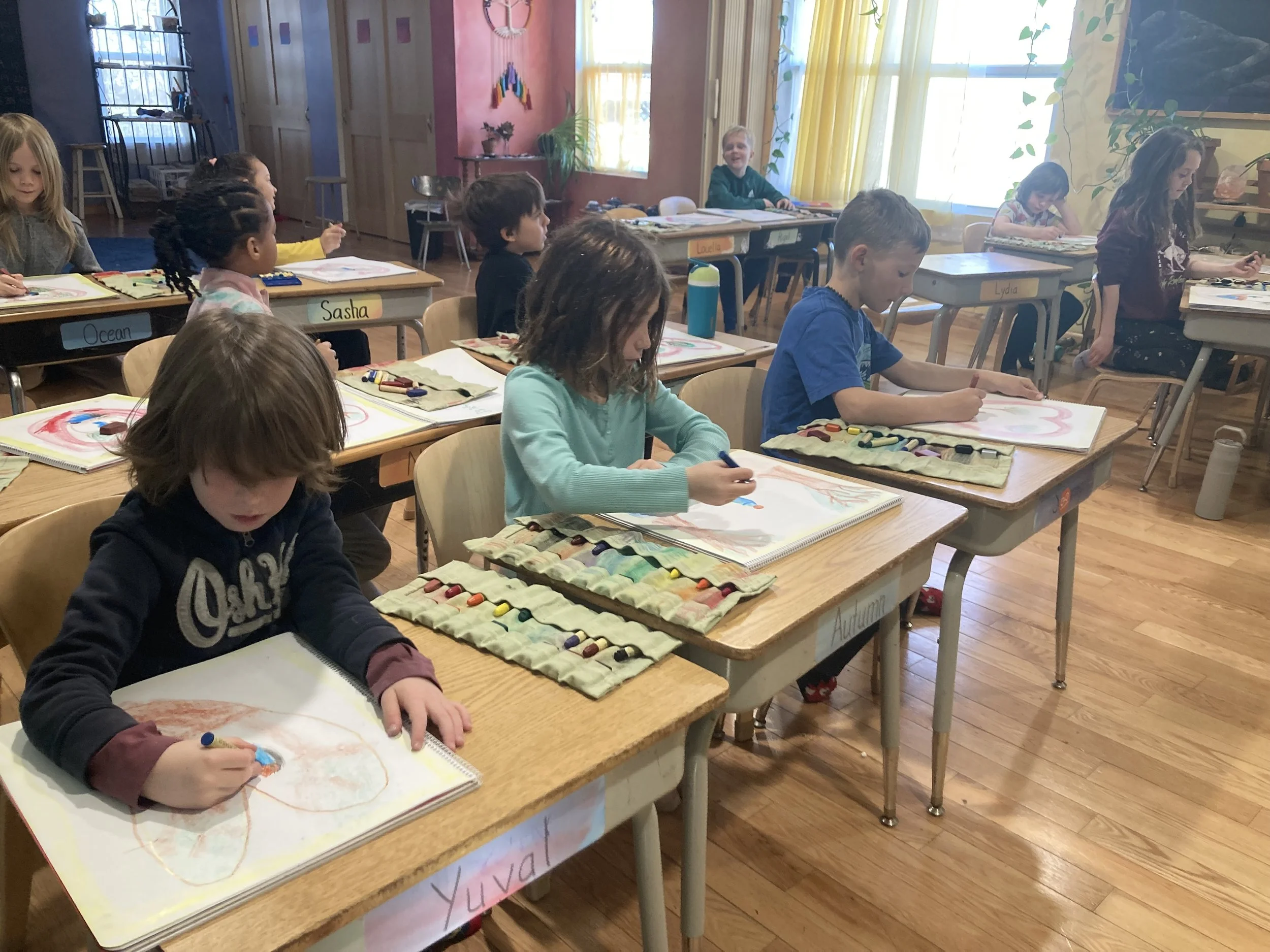
Our program in primary grades builds on the rich experience of early childhood, emphasizing hands-on and social learning even as formal academics are introduced. While children’s brains are ready for academic learning at this age, we continue to keep our focus on real-world, human-based experiences, with no educational technology or screens in our classrooms.
Rather than rely on tech to engage their classes, Waldorf School of St. Louis teachers plan active, collaborative, and multisensory lessons. For example, 1st graders will often practice skip counting and times tables while jumping rope, encoding the knowledge into their physical bodies. 3rd graders might bake a tray of brownies to practice practical math skills like measurement and time-telling. At the same time, our students develop their imagination and creativity through the arts, music, and stories, which are incorporated into the curriculum across disciplines.
While it may sound counterintuitive, these screen-free experiences are the very best way to prepare for a tech-forward future. Why? Because creative and critical thinking skills are what allow children to grow into active, intelligent, and balanced tech users, rather than passive consumers. Uniquely human capacities—like problem-solving, creative thinking, and emotional intelligence—are increasingly considered the most sought-after skills in the job market.
Human Relationships at the Heart
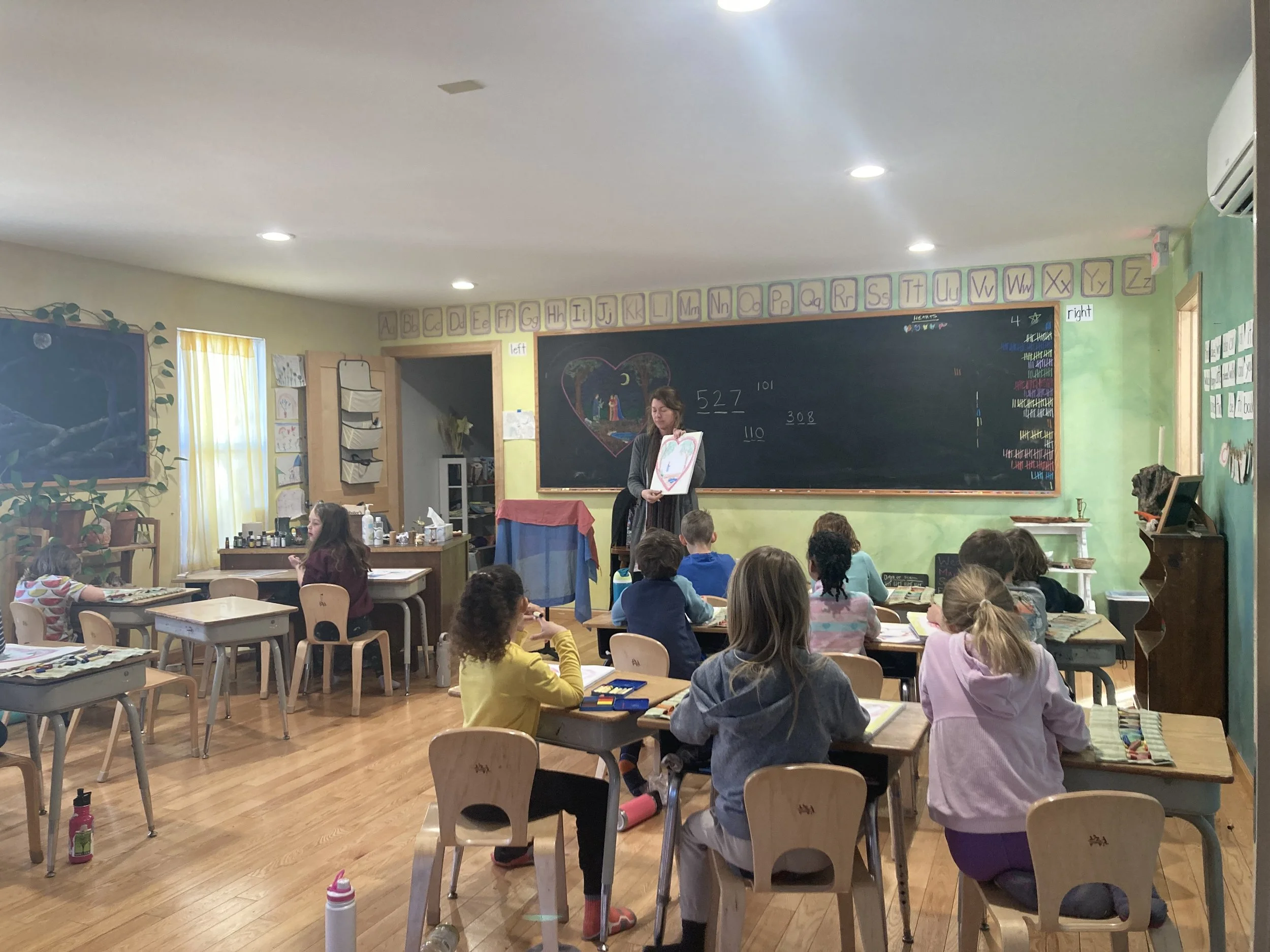
Babies have a remarkable ability to learn a language—a tremendous skill that is still largely a mystery to scientists. In a recent study, researcher Patricia K. Kuhl and colleagues found that infants were unable to learn basic language from screens and audio recordings alone; language acquisition only effectively takes place when it is learned from another human being.
This study underlines something that, as parents and educators, we know intuitively: That children learn best, and are most engaged, when learn in a social setting. In fact, children will often deepen their understanding and retention of subjects when working in social peer groups. Screens and educational technology undermine this crucial aspect of learning.
Across disciplines, human relationships are at the core of our school’s approach to instruction. Throughout the grades, children build strong and trusting relationships with their teachers. They also have an opportunity to work together every day: puzzling over math problems in pairs, singing and playing music together, planting seeds in the garden, and, of course, playing together during recess!
We prioritize these experiences because we know that they take time to develop. There is no shortcut to becoming a good friend, a trusted lab partner, or a responsible citizen of the world. As author Kim John Payne writes, “emotional intelligence can't be bought or rushed. It develops with the slow emergence of identity, and the gradual accumulation of life experiences.”
A Conscientious Community
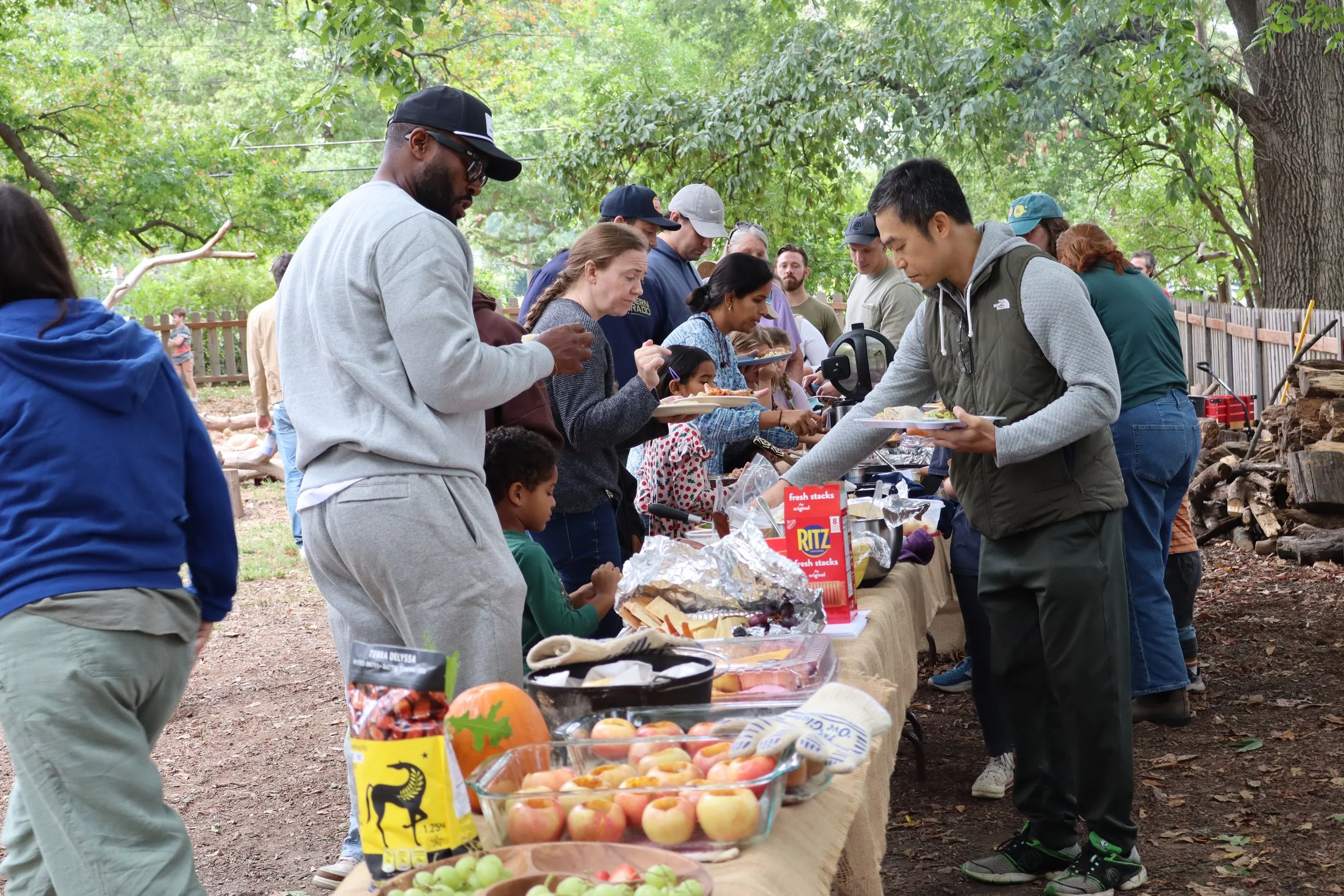
There has been a flood of recent research around the effects of digital media and devices on childhood cognition and development, as well as a nationwide interrogation of technology in schools. Many parents are well-aware that limiting tech and digital media can have positive outcomes for young children—and they would like to give their children the simpler and more human childhood that they remember. That said, it can be particularly challenging to limit tech when tech is everywhere!
The Waldorf School of St. Louis offers a meaningful respite from the digital onslaught and a like-minded and supportive community of parents and teachers. While our families are diverse, we share a commitment to making conscientious choices as parents and educators and limiting the effects of mass media on our children. Here, teachers work in partnership with parents to model healthy habits around media and technology at school and at home.
And, because we share this commitment, children here are generally exposed to less media outside of school, so there is no pressure to talk about the latest cartoon character or video games on the playground, giving children an opportunity to experience childhood with wonder, creativity, and imagination—together.
Would you like to be a part of a community like ours? Please reach out to our Enrollment Team, Emily Hemeyer and Haley Biehl, at admissions@waldorfstl.org