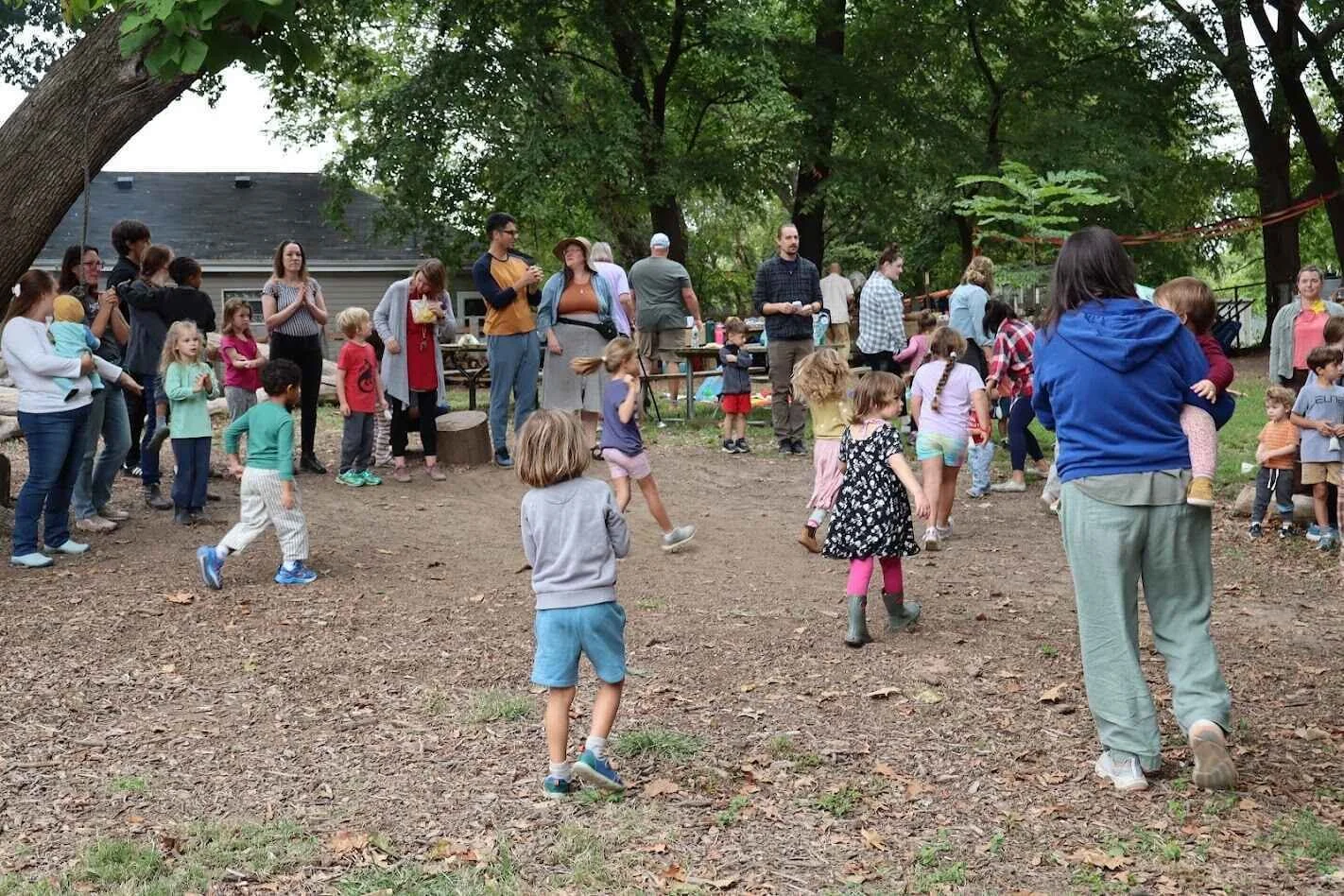
At the Waldorf School of St. Louis, children of different ages and grade levels learn, work, and play together, enhancing the school experience in many meaningful ways.
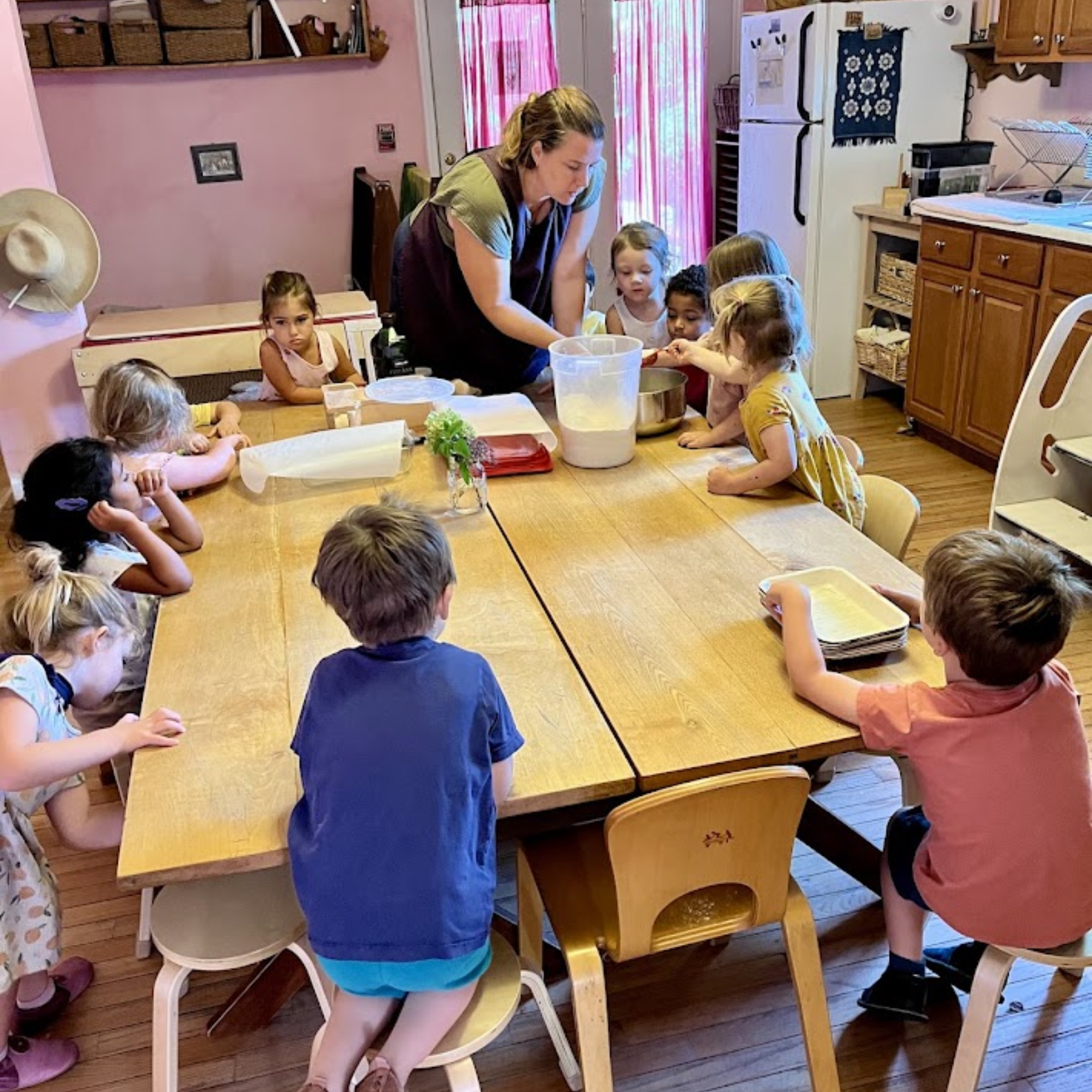
Waldorf and Montessori are both long-standing, time-tested educational systems, popular throughout the world. While they have different teaching practices, Montessori and Waldorf schools agree on many things, including the importance of limiting screen time during childhood, building a connection to the natural world, and following a curriculum that aligns with theories of child development. In addition, both Waldorf and Montessori schools often teach within the context of close-knit mixed-age classrooms.
Mixed-age classrooms provide a multitude of benefits to children. When well-managed, a cohort that combines multiple ages and grade levels can boost learning for all students, support the development of social-emotional skills, and build self-confidence, among other positive impacts.
At the Waldorf School of St. Louis, our students learn in mixed-age classrooms in preschool, kindergarten, and elementary school, led by teachers who are specially trained to work in these environments. Year after year, we watch children at our school thrive in joyous, social, and screen-free classrooms, where children feel a sense of comfort and belonging in our warm and family-like community.
A Contemporary Take on a Time-Honored Approach
For many, the term “mixed-age classrooms” conjures up the image of the old-fashioned one-room schoolhouse that was once the symbol of American education. Overseen by a single teacher, these small community-based classrooms welcomed local children of a wide range of ages, who learned with and alongside each other.
As public education expanded in the late 19th century, grouping students by birth date became the default sorting system at most schools—though this type of grouping offers no specific benefit to students. In fact, by moving to an age-segregated model, students lost many of the pluses of the mixed-age environment, especially when it comes to the inherent social-emotional skills required within a mixed-age group.
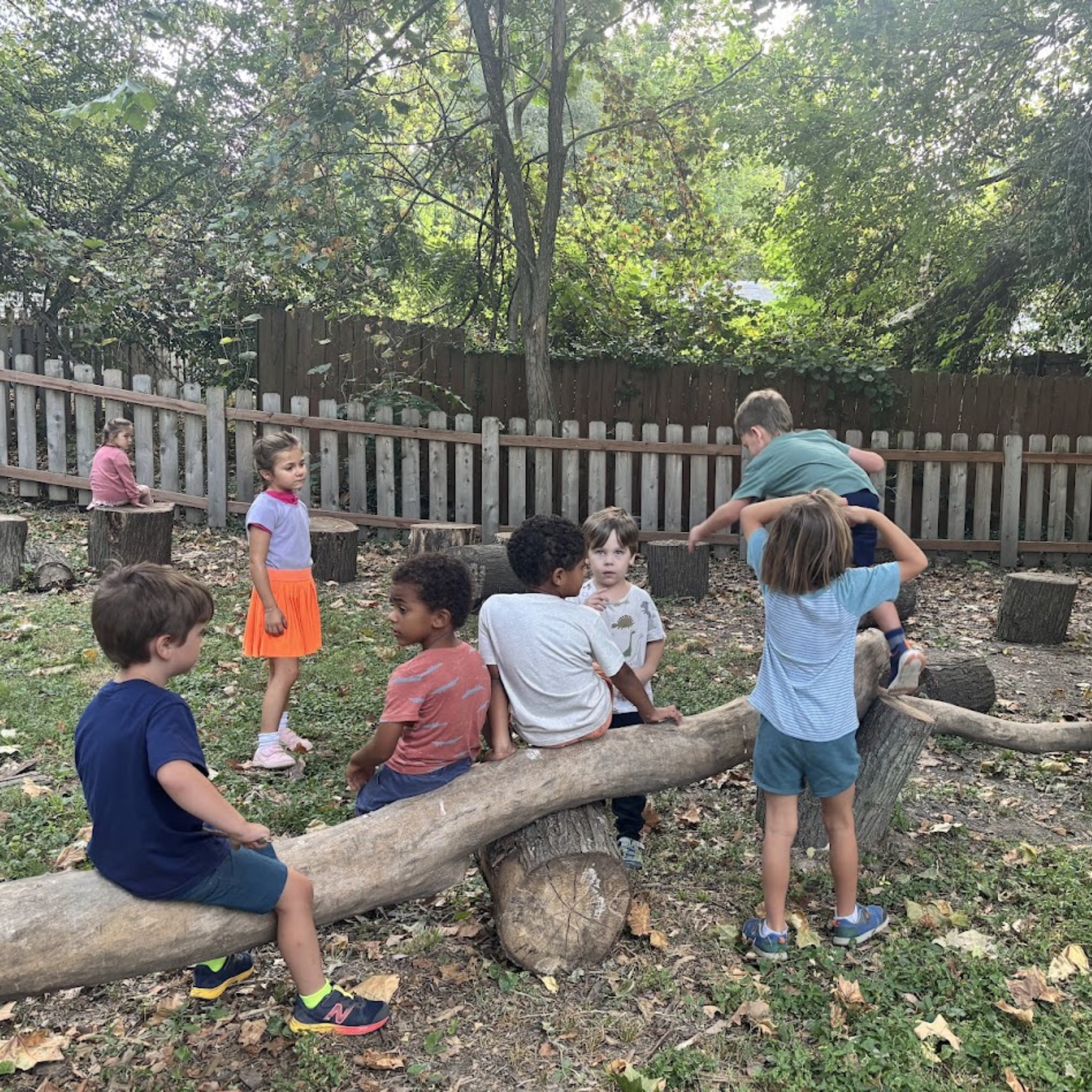
While mixed-age classrooms are far less common today, there is nothing antiquated about them. When well managed by a specially trained teacher, a mixed-age and mixed-ability classroom can provide a rich blend of learning experiences that enhance students’ overall engagement with the material—and each other. At the Waldorf School of St. Louis, classes are a mix of group movement and instruction, teacher-guided team projects, small group collaborations, and ample individual and bookwork.
The overall benefits of mixed-age and mixed-ability classrooms are supported by current research in education and cognition, which shows that children are hard-wired to learn in social environments, often taking concepts further or deepening their understanding of a topic by hearing from and collaborating with students who have different perspectives or abilities. We see this effect in peer tutoring programs, which are shown to benefit the student who is receiving help, as well as the tutor!
Student-Centered Learning
Children reach milestones at different ages. A physically precocious child can be toddling on two legs at just 9 months while another may need double that time—18 months!—to take their first steps. Both children fall squarely within the average age range for walking. Most importantly, both children will be deftly running alongside their friends by the time they reach the age of 3.
As parents and educators, we understand that this is how human development works. While children generally reach milestones in a predictable sequence, there is a wide range of what’s considered typical, with most children surging ahead in some areas and growing more slowly in others. As a result, any classroom—even those grouped by age—will include students with mixed abilities, maturity, and academic readiness. In fact, while grouping students by age is often the most efficient way to organize a larger school, it is based on the faulty premise that children of the same age are also experiencing the same developmental milestones.
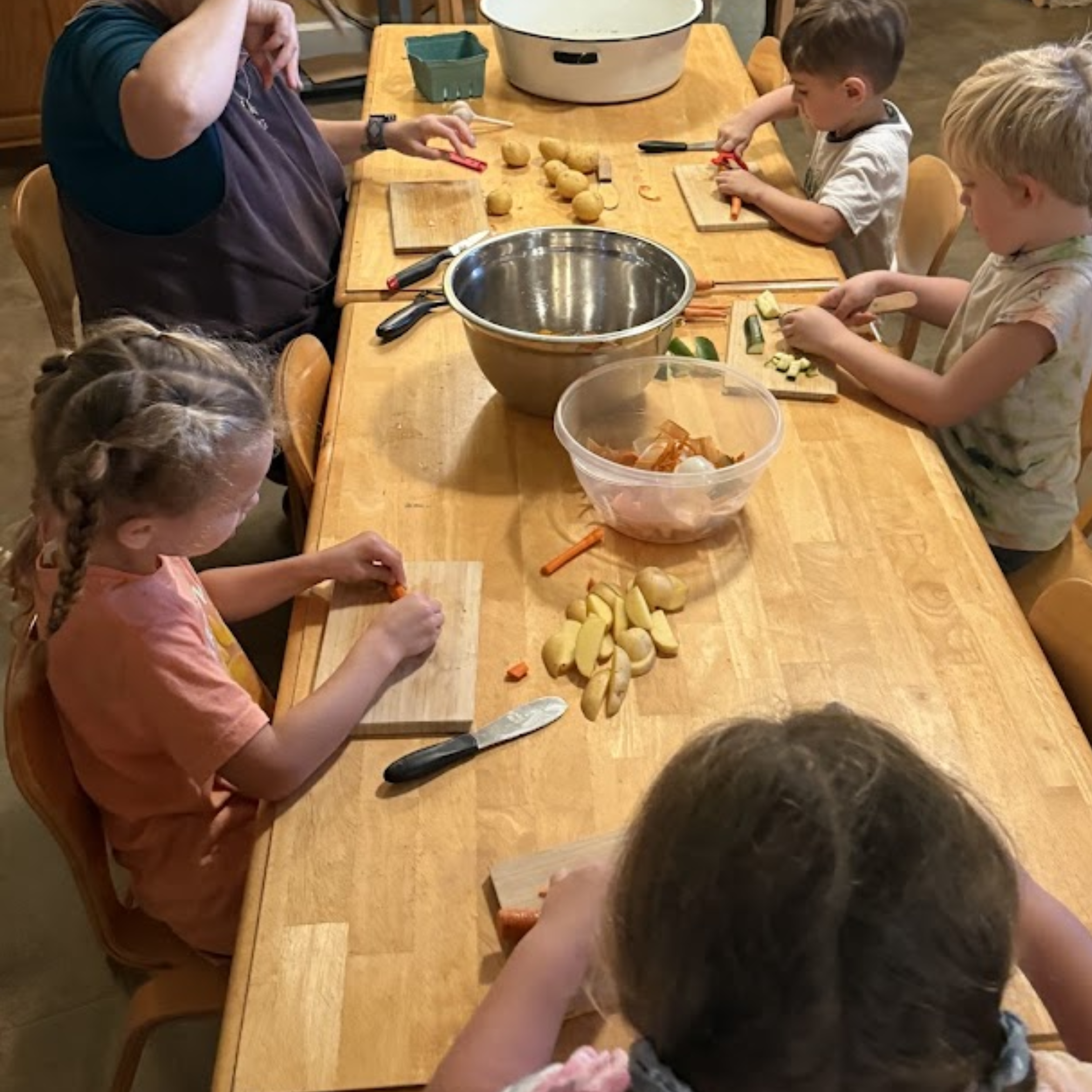
A mixed-age classroom creates more space for children to develop at their own pace—whether they are exceeding benchmarks or reaching them more slowly. Without the pressure or expectation that every student will take on the same level of work, students can focus on reaching their personal best. Teachers, in turn, can be responsive to each individual’s development, rather than measuring the whole class against the same grade-level benchmark. This is particularly important when it comes to foundational academic skills, like reading and writing, where being pushed too early can have negative consequences, undermining a child’s confidence over the long-term.
Critics of mixed-age and mixed-ability classrooms often claim that they aren’t appropriate for high-achieving students, who may not be sufficiently challenged (or, conversely, that they disadvantage students who haven’t reached benchmarks by leaving them behind). At our school, this simply isn’t true. Teachers at the Waldorf School of St. Louis know that every child, at every age, has strengths, challenges, and room for growth.
Our teachers are specially trained to consider every child’s unique development—nurturing their strengths, providing appropriate challenges, and guiding them to naturally arrive at benchmarks over the course of childhood. Consistently small class sizes allow teachers the opportunity to observe and work closely with every student. Additionally, because our teachers work with the same cohort of students over multiple years, they build deeper knowledge and understanding of their students with time.
Promoting Social-Emotional Skills and Self-Confidence
In a Waldorf classroom, we teach much more than academics. Our holistic approach is designed to foster a child’s social, emotional, spiritual, physical, and cognitive development. Case studies have shown that mixed-age classrooms promote social harmony and learning through play in a way that single-age classrooms often do not.
For younger children, having older students to look up to and emulate can help them develop more maturity and a deeper sense of responsibility to the group. They mimic behaviors in the classroom and learn to engage in more advanced imaginative play during recess. For older children, being a leader and a role model for younger students can be empowering, building their confidence in themselves. It also teaches them patience and kindness, qualities that we deeply value in the Waldorf of St. Louis community.

Socially, a mixed-age classroom is also a more authentic representation of the real world. Even today, children are only separated by age in school. At home with their families, in their neighborhood, on sports teams, in extracurricular music and art classes, in church groups, and in most other environments, children interact and befriend other children of different ages—just as they will throughout their lifetime.
In this way, our class communities function more like families, with both older and younger students working and playing together. This dynamic can be particularly important to children who do not have siblings, providing them with a broader spectrum of social-emotional maturity than they have access to at home.
A Close-Knit School Community
Step onto our schoolyard during morning recess and you’ll see students building forts, pushing each other on the tire swing, or gathering leaves together. There is a sense of camaraderie between students, who comfortably mix, make friends, and play together across ages and grade levels.
We believe that our small, close-knit, and mixed-age classrooms contribute to the strong sense of community on our campus, where children—as well as their families—experience belonging and care.
Would you like to see our school in action? Please sign up for a tour here.